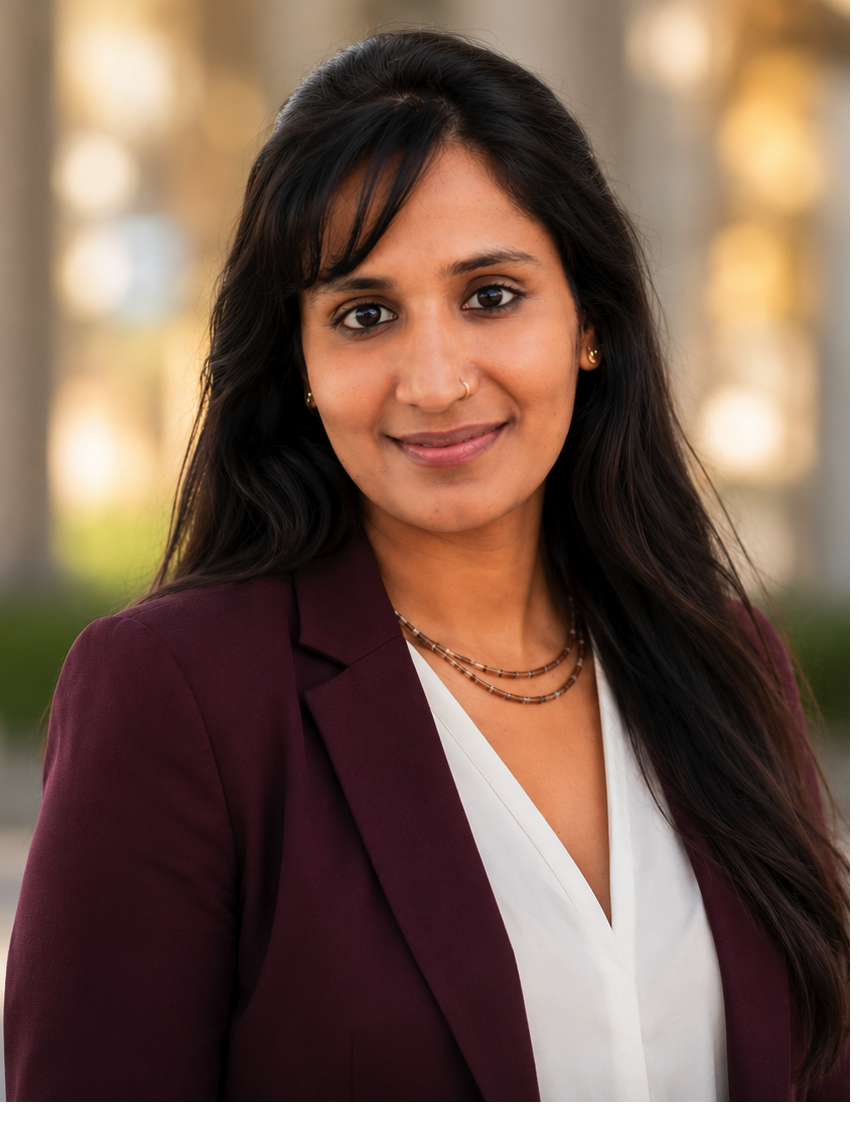
Nency Dhameja
Last Updated: October 2026
Department of Economics
Binghamton University
4400 Vestal Parkway East
Binghamton, NY 13902, USA
Fields
Primary: Urban and Regional Economics; Applied Microeconomics
Secondary: Applied Econometrics; Labor Economics; Computational Economics
Education
Binghamton University, NY, USAAug 2021 – present
Ph.D. in Economics (Expected May 2027)
Committee: David Slichter (chair), Andreas Pape, Solomon W. Polachek, and Ivan Korolev
S P Jain School of Global Management, SingaporeSep 2018 – Jul 2020
Executive Master of Business Administration (EMBA) in Finance
Thesis: Behavioral factors in stock markets
Mahatma Gandhi Mission’s College of Engineering & Technology, IndiaOct 2001 – Jun 2005
Bachelor of Technology in Electronics & Telecommunications
Research
Job Market Paper
When Does Crime Enter House Prices? Evidence from Chicago
I estimate how crime affects house prices in Chicago. Although homebuyers presumably care about crime, I find that only four of twenty-two offenses (homicide, burglary, narcotics, and vandalism) reduce home sale prices. I argue that limited information may help explain this pattern: crime affects prices only if buyers learn of an incident and update their beliefs about future crime. Three findings are consistent with this interpretation. First, price effects of crime are hyperlocal even though the predictability of crime is not. Second, these effects vary with incident visibility; for instance, burglary and narcotics discounts are concentrated among incidents at a home’s frontage, not those inside the dwelling. Third, asking prices respond more to nearby crime when listing agents have more local experience. Crime also affects transactions beyond closing prices: some offenses lower asking prices or raise withdrawals without detectable closing-price discounts. House-price discounts alone may therefore understate homebuyers’ willingness to pay to avoid crime.
Publications
Causal Forests versus Penalized Splines for Heterogeneous Treatment Effects (with Ivan Korolev and Abiodun Musbaudeen) Economics Letters, 268 (2026), 113205.
Consortium-Authored Publications
AI-assisted teams outperform AI-led teams but not human-only teams in assessing research reproducibility in quantitative social science (Brodeur et al.) Proceedings of the National Academy of Sciences, 123(22) (2026), e2524747123.
Working Papers
The Effects of Diversity Statements in Faculty Hiring (with David Slichter)
Cashing the Credit: Anomalous Billing and Firm Dynamics in Italy’s Superbonus 110% (with Marcello Graziano, Maurizio Fiaschetti, and Davide Calandra)
Social Context in the Schelling Model using LLMs (with Andreas Pape, Srikanth Iyer, Yixin Ren, Christopher Zosh, Mohammed Mahinur Alam, Carl Lipo)
Monte-Carlo Tests for Identification and Validation of Stochastic Agent-Based Models (with Christopher Zosh, Yixin Ren, Andreas Pape) Revise & Resubmit, Journal of Artificial Societies and Social Simulation (JASSS)
Work in Progress
Do Crime Maps Change How House Prices Respond to Crime?
Food Swamps: Urban Retail and Health
Grants and Awards
Graduate Student Research Fund, Binghamton University (2026), for MLS transaction data
Dean’s List (Term II, III), S P Jain School of Global Management, 2019–2020
Research Affiliations
Fellow, Institute for Replication, since 2026
Conference Presentations
2027AREUEA–ASSA Poster Session (scheduled)
American Economic Association (AEA) (scheduled) 2026Western Economic Association International (WEAI)
Society for the Advancement of Behavioral Economics (SABE)
American Society of Health Economists (ASHEcon)
Midwest Economics Association (MEA)
American Economic Association (AEA) 2025Southern Economic Association (SEA)
Western Economic Association International (WEAI)
Finger Lakes (FLX) Economics of Education Conference
Eastern Economic Association (EEA) 2024Eastern Economic Association (EEA)
Online Presentations
2026Canadian Economics Association (CEA) 2025American Political Science Association (APSA)
Poster Presentations
2026Society for Causal Inference (SCI) 2025Association for Public Policy Analysis & Management (APPAM)
Teaching
Binghamton University, NY, USA2022 – present
Instructor
Economics of Poverty and Discrimination (ECON 144), Winter 2026. Sole instructor
Teaching Assistant
2026Macroeconomic Theory (ECON 362, Fall, current)
Introduction to Econometrics (ECON 466, Fall, current)
Economics of Education (ECON 448, Spring) 2025Behavioral Economics (ECON 483C, Fall)
Agent-Based Modeling with Python (ECON 570/670, Spring) 2024Forecasting (ECON 467, Fall)
Introduction to Econometrics (ECON 466, Fall)
Econometrics (ECON 616, Spring) 2023Economic Development of Latin America (ECON 483, Fall)
U.S. Financial Systems: Markets and Institutions (ECON 350, Spring) 2022Economics of Corporations (ECON 454, Fall)
Teaching Simulations
Service
Session Discussant, Western Economic Association International (2026)
Conference Volunteer, Society for Causal Inference Annual Conference (2026)
Session Discussant, Midwest Economics Association Annual Meeting (2026)
Session Chair and Discussant, American Political Science Association (2025)
Session Discussant, Eastern Economic Association Annual Conference (2024)
Additional Training & Workshops
Supplementary Methods Training
- Advanced Confounding Adjustment, Harvard T.H. Chan School of Public Health, 2026
- Causal Inference Workshop (Advanced), Northwestern University, 2025
- Causal Inference Workshop (Main), Northwestern University, 2025
Pedagogical Workshops/Conferences
- Conference on Teaching and Research in Economic Education (CTREE), AEA, 2026
- TeachECONference (CTaLE), 2026
Professional Experience
Data Analyst, Graduate Admissions Office, Binghamton UniversityAug 2021 – Jul 2022
Industry, India & SingaporeJun 2005 – Aug 2021
Software engineering, business analysis, and project management at Accenture, Grab, Jones Lang LaSalle, Agilent Technologies, and CSC (now DXC Technology). JLL Pinnacle Award, 2017; Agilent Technologies Appreciation Award for Innovation, 2008, and Outstanding Individual and Team Performance Awards, 2009–2011.
Computational Skills
Methods: panel methods; causal inference; spatial data construction; agent-based modeling (including LLM agents); machine learning (causal forests, gradient boosting, LASSO, random forests)
Spatial data analysis: large-scale geocoding, spatial matching, and spatial inference.
Software: Stata, R, Python, SQL, Git, QGIS
Languages
English (Fluent), Hindi (Native)
References
Dr. Solomon W. Polachek
Distinguished Professor of Economics
Binghamton University
polachek@binghamton.edu